
Thank you for Subscribing to CIO Applications Weekly Brief


 Michael Freeman, Founder, CEO, and CTO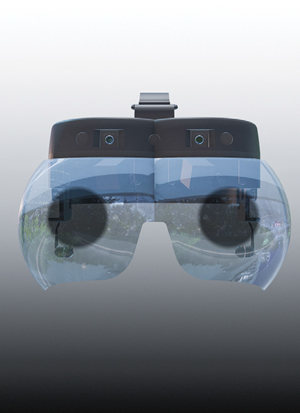
An incurable eye disease, AMD affects over 13 million people in the U.S. causing damage to a person’s central vision, making it harder for them to even carry out simple everyday activities such as reading and writing. Thus, Richard had to give up flying as well as driving cars, reading emails, and his beloved yard work. Richard’s budding idea to use AR to solve the malady pushed him and his sons and grandson, Jordan Boss, forward to find a solution for the people suffering from AMD. In a few years, they went on to develop a first-of-its-kind, breakthrough eye-tracking technology. Their company, Ocutrx Vision Technologies’ flagship product Oculenz AR glasses, the groundbreaking technology promises to change the scenario for patients with AMD or other irreversible central eye defects. Following is the insights that the founder, CEO, and CTO of Ocutrx, Michael Freeman provided us about the innovative solution, designed in collaboration with the award-winning industrial firm Karten Design and how it brings new hope to regain functional vision that was previously considered impossible.
Impeccable Visual Field Testing
Ocutrx’s USPTO-patented Oculenz has the widest field-of-vision in the industry, with a 110-degree high-resolution heads-up display, in a wirelessly connected, untethered, micro-weight headset.
The AR device consists of eye-tracking cameras and infrared (IR) illumination mounted in a nose bridge that provides a clear line-of-sight to the eye and does not obstruct the user’s field-of-view. When a patient puts it on, Ocutrx’s Visual Field testing identifies and maps out the analog retinal defect in relation to the digital glasses. Then the eye-tracking technology keeps the patient’s eye gaze aligned with the Oculenz buffered streaming video image.
Capturing, Tracking, and Processing Eye Movements Seamlessly
Through neuroadaptation, instead of delivering images to the defective area, the video is displayed by the device to the functional areas of the macula in the retina or areas adjacent to the peripheral retina. The projection can also be adjusted during the course of disease progression using controls on the headset. The AR wear can also be paired with other devices, like a smartphone, tablet, laptop, or smartwatch. Then all of a user’s apps on their other devices can be migrated to the Oculenz headset and controlled seamlessly, and the Oculenz can make and receive cellular calls like a smartphone.
Ocutrx’s USPTO-patented Oculenz has the widest field-of-vision in the industry, with a 110-degree high-resolution heads-up display, in a wirelessly connected, untethered, micro-weight headset
Capturing, Tracking, and Processing Eye Movements Seamlessly
Oculenz’s clinical-test on patients with eye defects has already proved to be extremely effective. People who earlier couldn’t even read the first line on an eye chart, today, are able to read five lines down by wearing Ocutrx’s lenses. That being said, Ocutrx’s methods for capturing, tracking, and processing eye movements in the Oculenz device not only helps patients with AMD but also those with eye movement disorders. The glasses have the potential to help detect and correct abnormalities in eye movements like patients with amblyopia (lazy eye), strokes, concussions, and neurologic disorders.
What truly makes the company’s AR glasses unique is that they are less obstructive and lightweight in comparison to Magic Leap’s AR headset or Microsoft’s HoloLens 2. In addition, the design of the glasses makes Oculenz suitable for a number of other medical applications. For example, a surgeon in an OR can now benefit from Oculenz during surgery through its immersive 3D visualization capabilities.
The Fourth Wave of Digital Technology
Recently, Ocutrx announced the results of the first pre-patient trial for the company’s Oculenz AR glasses. In the single-arm crossover study of subjects with Advanced Macular Degeneration (AMR), the Oculenz AR glasses significantly improved the ability of subjects to read small letters and print at near and far viewing distances when compared to their standard near correction (or no correction) in subjects with scotoma impairment from AMD.
The trial subjects initially used a self-calibration module, where the digital AR headset identified the subject’s scotoma (scotoma marker), which correlated the area of non-vision with the AR headset. The self-calibration results were compared to a Fundus Autofluorescence photo of each eye taken prior to the testing. Reading performance was evaluated using the logMAR chart, per eye, both before and after wearing the Oculenz AR headset. The CNEC was used to test reading skills before and after wearing the Oculenz device set at no magnification. Several Oculenz modalities were used during the testing, including Reading Mode which moves the image rectilinearly (left and right); Face Mode– which moves the pixels 360° out of the area of the defect; and Task Mode—which provides a cat-eye or fish-eye cut-out of the defect. The study consisted of one visit, which included Autofluorescence photos, training with the Oculenz headset, and tests of visual function.
Today, the company is working on enhancing Oculenz’s application for sectors other than healthcare, including gaming, commercial, industrial, e-commerce, aerospace, drones, and defense. Freeman mentioned that it is a time where AR/VR— considered to be the fourth wave of digital technology—is becoming mainstream, just like smartphone did a few decades back. And, with its easy-to-wear, user-friendly design, Oculenz is all set to become the ‘eyes’ creating impactful, revolutionary experiences for people with vision defects.
× 
CIO Applications Weekly Brief
Be first to read the latest tech news, Industry Leader's Insights, and CIO interviews of medium and large enterprises exclusively from CIO Applications
